


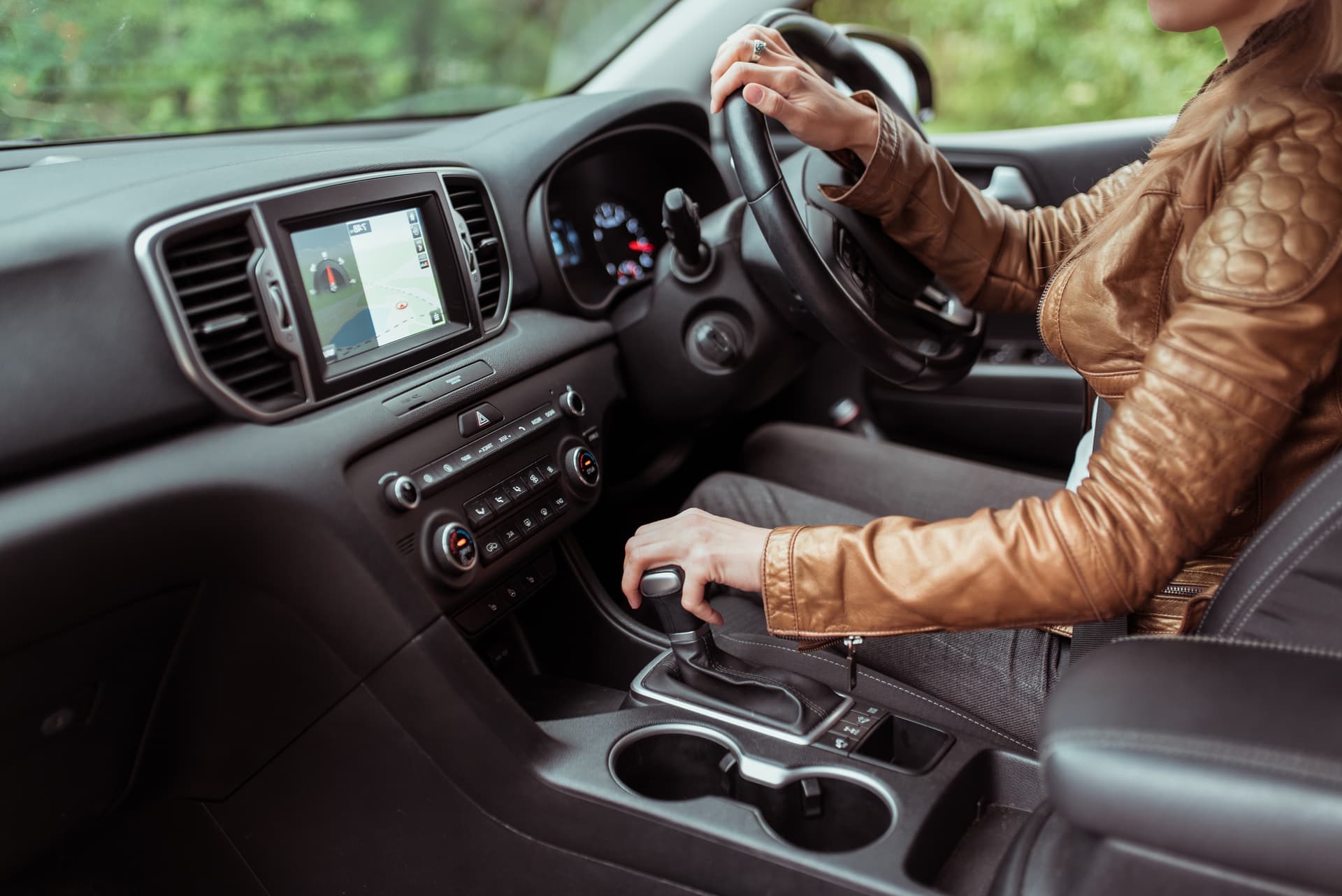
Automatics have shifted from a premium option to the default choice for most new car buyers. That shift is now working its way through the used market too. Choosing between them for a used car comes down to more than just preference though since insurance, repair risk and running costs all vary by gearbox type. For the full buying process beyond gearbox choice alone, see our complete guide to buying a used car.
The short version:
- Manual remains cheaper to buy, insure and maintain on the used market overall, though the gap has narrowed considerably.
- Not all automatics are the same. Torque converter, DSG and CVT gearboxes carry genuinely different reliability and repair risks.
- Modern automatics often match or beat manual fuel economy, reversing decades of the opposite being true.
- An automatic-only licence can never legally drive a manual car, though the reverse restriction doesn't exist.
- DSG gearboxes need specific maintenance most manual and CVT buyers never have to think about.
Automatic vs Manual at a Glance
| Feature | Automatic | Manual |
|---|---|---|
| Purchase price | Typically higher | Typically lower |
| Insurance group | Often slightly higher | Often slightly lower |
| Fuel economy (modern cars) | Often equal or better | Often equal or slightly worse |
| Fuel economy (pre-2015 cars) | Usually worse | Usually better |
| Specific repair risk | DSG clutch packs, CVT belts | Clutch wear |
| Driving effort in traffic | Lower | Higher |
| Learner licence restriction | None | None |
| Resale demand trend | Rising | Declining |
What Are the Different Types of Automatic Gearbox?
Treating "automatic" as one single category is the biggest mistake used car buyers make when comparing gearbox types since the three main systems on the market carry genuinely different risk profiles.
Torque Converter Automatics
The traditional automatic gearbox, using hydraulic fluid to transfer power smoothly between the engine and wheels. It's mechanically simpler than DSG or CVT alternatives, generally proving durable and straightforward to maintain, making it the lowest-risk automatic option on the used market.
Dual-Clutch (DSG/DCT) Gearboxes
Known as DSG on Volkswagen Group cars and PDK on Porsches, this system uses two separate clutches to pre-select the next gear, delivering fast, precise shifts that outperform torque converters for outright speed. Wet-clutch DSG units built from around 2012 onward have largely resolved the reliability concerns that affected earlier versions, though they still need specific fluid changes roughly every 40,000 to 80,000 miles. A DSG that's missed several of these changes represents a genuine repair risk, with mechatronic unit or clutch pack failures commonly costing well over £1,500 to fix.
CVT (Continuously Variable Transmission)
Rather than fixed gears, a CVT uses a belt and pulley system that adjusts continuously, delivering smooth, seamless acceleration without any noticeable gear changes at all. CVTs paired with hybrid systems, particularly Toyota's e-CVT, have an outstanding reliability record built on millions of cars worldwide. Standalone CVTs in non-hybrid applications can be more prone to belt wear at higher mileages, worth checking on any used example with six-figure mileage.
Does an Automatic Licence Restrict What You Can Drive?
Yes, in one direction only. Passing your test in an automatic means your licence only permits driving automatic cars since you've never demonstrated the ability to use a clutch and gear lever. Passing in a manual, however, qualifies you to drive both manual and automatic cars without any restriction, worth knowing before choosing which type of car to learn in since it's a decision that shapes every car you're legally allowed to drive afterward, not just your first one.
How Do Running Costs Compare?
Fuel Economy Differences
For decades, manual gearboxes reliably returned better fuel economy than automatics, substantially reversed for cars built over the last decade or so though. Modern automatics, particularly DSG and CVT variants, can keep an engine running in its most efficient range more consistently than a human driver managing gears manually, sometimes narrowing the difference to under 1mpg on a like-for-like comparison. Older used cars, generally those built before 2015, still tend to favour manual for outright economy since the automatic gearboxes fitted to cars of that era were considerably less efficient than today's versions.
Servicing and Maintenance Costs
Manual gearboxes remain the cheapest to service, with a straightforward clutch as the main wear item. Torque converter automatics sit close behind. DSG gearboxes cost more to service specifically due to the fluid change intervals mentioned above. CVTs vary too, depending on whether they're paired with a hybrid system or used standalone.
Insurance Group Differences
Automatics commonly sit in a slightly higher insurance group than the identical manual version of the same car, reflecting higher potential repair costs rather than any difference in how the car is actually driven. The gap is usually modest, often just one or two insurance groups, rather than a dramatic difference on its own.
What Should You Check on a Used Automatic Specifically?
For a DSG or dual-clutch car, ask for evidence of regular fluid changes since this is the single most important maintenance record to see on this type of gearbox. During a test drive, listen and feel for any hesitation, jerkiness or clunking when pulling away from a standstill, all potential signs of clutch pack wear developing. For a CVT, feel for any unusual shuddering or a rubber-band-like sensation under hard acceleration, which can indicate belt wear. Check too for a service history showing the CVT fluid has been changed at the manufacturer's recommended interval. For a traditional torque converter automatic, a harsh or delayed shift, or any shuddering specifically at low speed, is worth investigating further before buying.
What Should You Check on a Used Manual Specifically?
Clutch wear is the main thing to check. It's covered in detail in our guide on test driving a used car. In short, a biting point that's crept unusually high, slipping under acceleration in a higher gear, or a burning smell after repeated hill starts all point toward a clutch nearing the end of its life.
Which Is More Reliable Long Term?
Genuinely reliable, independently verified data comparing automatic and manual reliability directly is limited since most reliability surveys track specific models rather than isolating gearbox type alone. What is clear from repair data is that manual gearboxes remain the simplest and cheapest to maintain overall, torque converter automatics come close behind, and DSG and CVT systems carry a higher specific repair cost if something does go wrong, even though modern versions of both have addressed most of their earlier reliability concerns. A well-maintained example of any gearbox type, with genuine service history to prove it, remains a safer bet than judging purely by gearbox category.
Which Suits Which Type of Driver?
Best for Heavy Traffic and Commuting
An automatic, torque converter or CVT specifically rather than DSG, removes the physical effort of constant gear changes in stop-start traffic, making daily commuting considerably less tiring over time.
Best for Country Roads and Enthusiast Driving
A manual still offers more direct control and engagement for drivers who genuinely enjoy the mechanical process of driving, particularly on quieter roads where gear selection becomes part of the experience rather than a chore.
Best for New and Learner Drivers
Either works well, though the licence restriction covered earlier is worth deciding on early. Learning in a manual keeps every future car available to you. Learning in an automatic can make the early stages of driving noticeably less stressful though, removing clutch control from the list of things to master at once.
How Does Automatic vs Manual Affect Resale Value?
This has genuinely shifted over the last decade. Automatics used to command a smaller pool of buyers and sometimes a slower sale. Manuals were the safer, more universally desirable choice back then. That pattern has reversed considerably, with automatic demand rising steadily as more drivers learn and prefer automatic transmission, particularly in urban areas. Manual cars in some segments now take longer to sell and can achieve a slightly lower price than the identical automatic version, a genuine reversal of how this used to work.
Pros and Cons of Automatic
Advantages:
- Less physically tiring in heavy traffic or long commutes.
- Modern versions often match or beat manual fuel economy, reversing the traditional disadvantage.
- Wider buyer pool on resale currently, reflecting rising automatic demand.
Disadvantages:
- Typically higher purchase price than the equivalent manual.
- Often a slightly higher insurance group.
- DSG and CVT-specific repair risks that a manual buyer never has to consider.
Browse our full range of used automatic cars at Car Planet.
Pros and Cons of Manual
Advantages:
- Typically cheaper to buy, insure and maintain overall.
- Simplest, lowest specific repair risk of any gearbox type.
- More direct control, valued by drivers who enjoy the mechanical experience.
Disadvantages:
- More physically demanding in heavy traffic or long commutes.
- Older examples often worse on fuel economy compared to a modern automatic equivalent.
- Smaller and potentially slower-selling buyer pool in some market segments currently.
Browse our full range of used manual cars at Car Planet.
What Are the Biggest Myths About Automatic and Manual Cars?
"Automatics are always slower than manuals." Not anymore. Modern dual-clutch automatics shift faster and more precisely than a human ever could. Many performance cars are now automatic-only for exactly this reason.
"Manuals are always more reliable." Broadly true for simplicity. Modern DSG and hybrid CVT systems have largely closed this gap though when properly maintained, with hybrid CVTs in particular having an excellent track record.
"Automatics always cost more to insure." Usually true. The gap is typically small though, often just one or two insurance groups, rather than a dramatic difference.
"You can convert a manual licence restriction later." Not easily. While technically possible in rare cases, converting an automatic-only licence to a full licence generally means retaking your test in a manual car.
Frequently Asked Questions
Can I drive a manual if I passed my test in an automatic? No. An automatic-only licence legally restricts you to automatic cars only, until you pass a further test in a manual.
Are automatic cars more expensive to insure? Usually slightly, often by one or two insurance groups compared to the identical manual version, reflecting higher potential repair costs.
Do automatics use more fuel than manuals? It depends on the car's age. Modern automatics, particularly DSG and hybrid CVT systems, often match or beat manual economy. Older automatics, generally pre-2015, usually still use more fuel than the equivalent manual.
Is a DSG gearbox worth the risk on a used car? Yes, provided you can see genuine evidence of regular fluid changes. A well-maintained DSG is a strong, reliable gearbox. One with a patchy service history carries real risk.
Can automatic gearboxes be repaired, or do they need full replacement? Both are possible depending on the fault. Some DSG and CVT issues can be repaired at component level. More serious failures sometimes require a full replacement unit though, considerably more expensive.
Every car sold through Car Planet comes with the gearbox type and service history clearly documented. You know exactly what you're buying before you commit.